
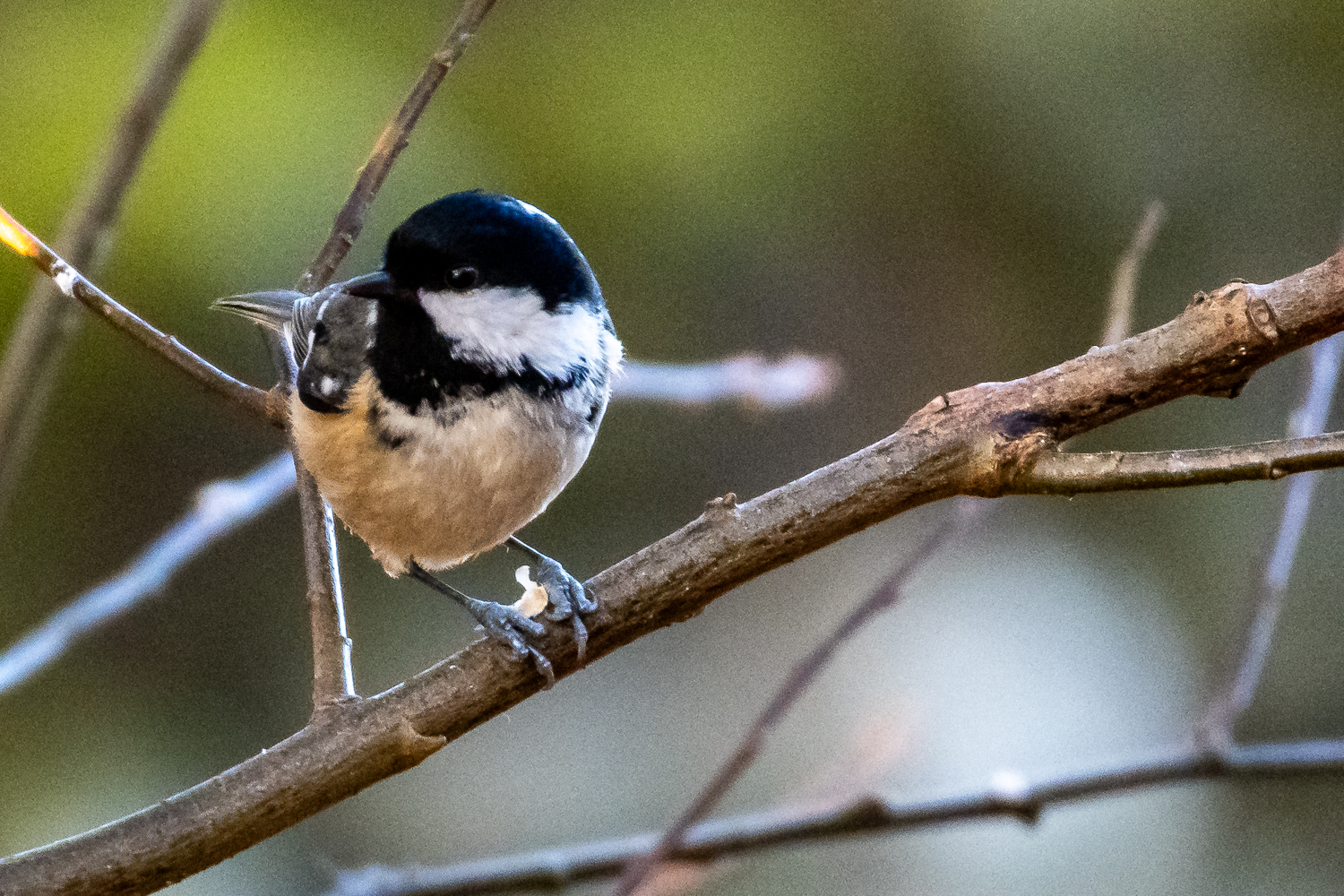
Following on from my earlier shot of some of our local birds, here is a new shot from today of one I didn’t catch last time – the Coal Tit (Periparus ater). I’ve still to catch Goldfinches, Long Tail Tits, Woodpeckers, and the Nut Hatches that regularly visit.
I’m sure you’re dying to hear what AI thinks about Coal Tits…well, here you go:
The Coal Tit: A Tiny Marvel of British Woodlands
Among the many avian wonders of the United Kingdom, the coal tit (Periparus ater) holds a special place. This diminutive bird, with its distinctive black cap and white nape, is a common but often overlooked resident of woodlands, gardens, and parks across the country. Despite its small size, the coal tit is a bird full of character and resilience, perfectly adapted to its environment.
Identification and Appearance
The coal tit is the smallest member of the tit family found in the UK. Measuring just 11-12 cm in length with a wingspan of around 17-21 cm, it’s a bird you might miss if you’re not looking closely. Its plumage is a mix of black, white, and grey, with a buffish underside. The black cap and bib, coupled with the white cheeks and a distinctive white patch on the nape, make it relatively easy to identify once spotted. Unlike its more colorful relative, the blue tit, the coal tit’s muted colors help it blend seamlessly into its forested habitats.
Habitat and Distribution
Coal tits are widely distributed across the UK, favoring coniferous woodlands but also thriving in mixed forests, gardens, and urban parks. They are particularly associated with areas rich in pine and spruce trees, where their small size and agility allow them to forage efficiently among the needles and branches. Their range spans from lowland areas to upland forests, and they are a common sight in many parts of the country year-round.
Behavior and Diet
Known for their energetic and acrobatic foraging, coal tits are a delight to watch. They primarily feed on insects and spiders during the breeding season, but in autumn and winter, their diet shifts to seeds, nuts, and berries. A fascinating trait of coal tits is their tendency to cache food. They often store seeds and other morsels in hidden spots, creating a winter larder to help them survive the colder months.
Their calls and songs, though not as melodic as some other garden birds, are high-pitched and distinctive. The coal tit’s repertoire includes a repetitive “see-see-see” or “sit-sit-sit” that helps them communicate with their flock.
Breeding and Nesting
Coal tits are early nesters, with the breeding season starting in April. They build their nests in tree holes, crevices, or even artificial nest boxes, often lining them with moss, feathers, and animal fur. A clutch typically consists of 6-11 eggs, which are white with reddish speckles. The female incubates the eggs for about two weeks, and after hatching, both parents work tirelessly to feed their hungry chicks. Fledging occurs after around 18-21 days.
Interaction with Humans
Coal tits are frequent visitors to garden feeders, where they eagerly take sunflower seeds, peanuts, and suet. They are particularly bold for their size, often darting in and out to grab food before larger birds have a chance. Providing food and maintaining a wildlife-friendly garden can help support coal tit populations, especially during harsh winters.
Conservation Status
The coal tit is currently classified as a species of “Least Concern” on the IUCN Red List, and its population in the UK is stable. However, like many woodland birds, it faces potential threats from habitat loss and climate change. Maintaining healthy forest ecosystems and promoting biodiversity in urban areas are vital for ensuring the continued success of this charming bird.
Conclusion
The coal tit may be small, but its lively personality and adaptability make it a fascinating subject for bird enthusiasts and casual observers alike. Whether flitting among conifers in a dense forest or hopping energetically at a garden feeder, the coal tit is a reminder of the rich biodiversity that surrounds us. Next time you’re out and about, keep an eye out for this tiny marvel — it’s well worth the effort.
