
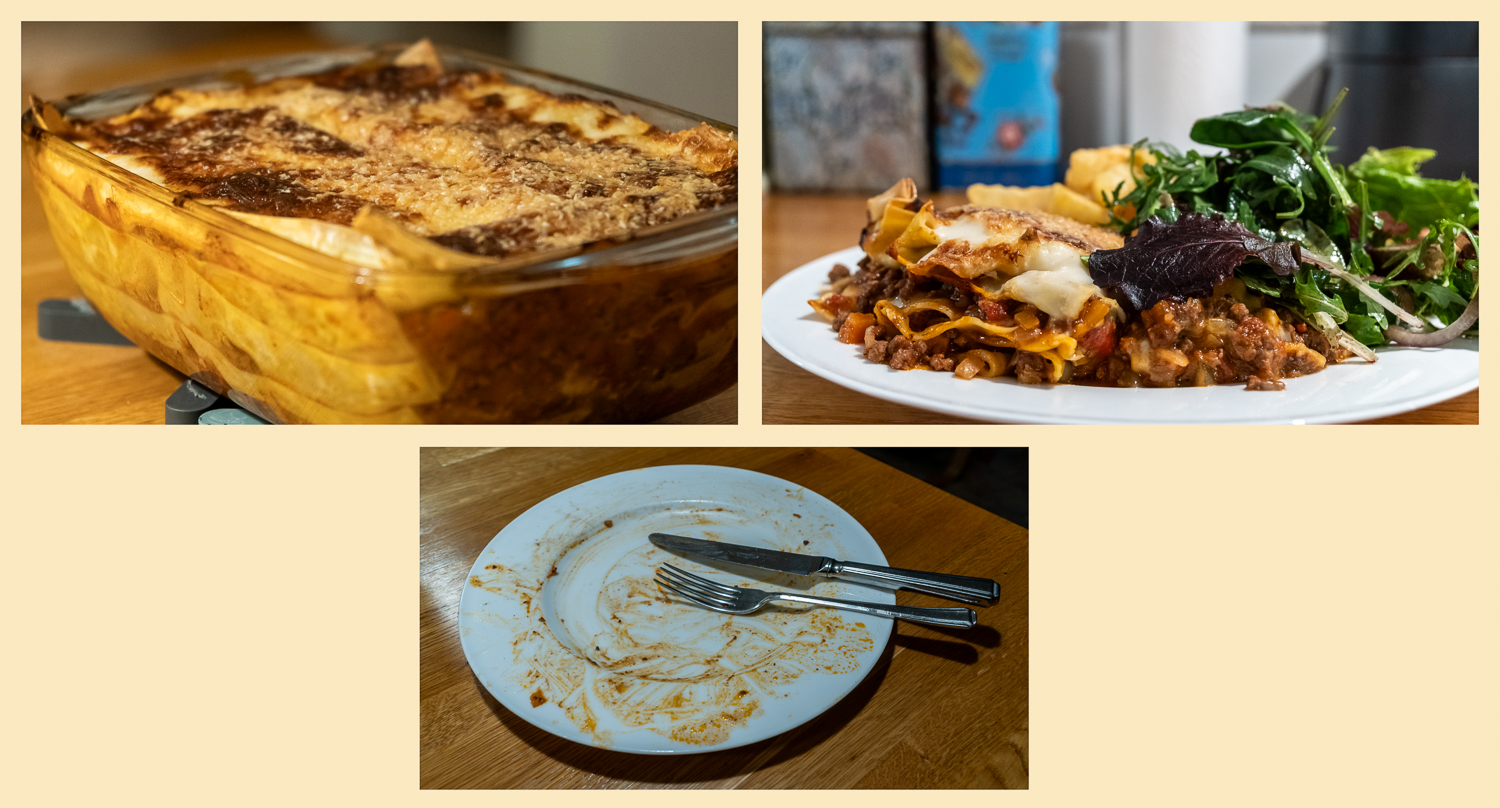
Debbie made a homemade Lasagne for dinner tonight, as you will be able to gather, it was lovely and we have 2 portions left over that have gone into the freezer for another day.
Let’s see what our friends over at the AI department have got to tell us about lasagne:
Lasagne: A Layered Tale of Culinary Heritage
Lasagne, one of the most celebrated dishes in Italian cuisine, holds a special place in the hearts of food lovers worldwide. Its rich, layered composition is a testament to the artistry of Italian cooking, blending history, culture, and a passion for flavours into every bite. Let’s journey through the fascinating story of this iconic dish.
The Origins of Lasagne
The history of lasagne is as layered as the dish itself, with roots tracing back to ancient civilizations. The term “lasagne” originates from the Greek word “laganon,” which referred to a flat sheet of dough sliced into strips. While laganon was not the layered dish we recognize today, it laid the foundation for pasta as we know it.
When the Romans encountered laganon, they adopted and adapted it, referring to their version as “lasana” or “lasanum,” which means “cooking pot” in Latin. This Roman dish consisted of layers of pasta-like dough, though it was likely quite different from the lasagne we enjoy today.
Medieval Evolution
The lasagne we are familiar with began to take shape during the Middle Ages in Italy. By this time, layered dishes had become popular, with cooks experimenting with fillings like cheese, meat, and sauces. A recipe resembling lasagne appeared in a 14th-century English cookbook called The Forme of Cury, which described layering pasta with cheese. This highlights how lasagne’s appeal extended beyond Italy.
Regional Variations
In Italy, lasagne evolved into a dish reflecting regional flavors and traditions. In Emilia-Romagna, the heartland of Italian cuisine, lasagne al forno became synonymous with layers of ragù (meat sauce), béchamel, and Parmigiano-Reggiano cheese. This version remains one of the most famous worldwide.
Meanwhile, in Naples, lasagne took on a different character. Neapolitan lasagne often includes ricotta, mozzarella, and sometimes even hard-boiled eggs or small meatballs, creating a richer and more decadent version. Each region’s take on lasagne showcases Italy’s diversity in culinary traditions.
Lasagne’s Global Journey
As Italian immigrants spread across the globe, so did their culinary traditions. Lasagne gained immense popularity in the United States, where it became a staple of Italian-American cuisine. American interpretations often include generous amounts of tomato sauce and cheese, reflecting local tastes.
In recent decades, lasagne has undergone countless innovations to cater to changing dietary preferences and creative impulses. Variants include vegetarian lasagne, gluten-free options, and even lasagne made with unconventional ingredients like eggplant or zucchini in place of pasta.
A Timeless Classic
Lasagne is more than just a dish; it is a symbol of comfort, celebration, and culinary ingenuity. Its ability to adapt to different tastes while maintaining its core identity ensures its enduring popularity. Whether served at a family gathering, a formal dinner, or enjoyed as leftovers, lasagne continues to bring people together.
This dish reminds us that food is not merely sustenance but a bridge to history and culture. The next time you savour a slice of lasagne, take a moment to appreciate the centuries of tradition layered within it.
