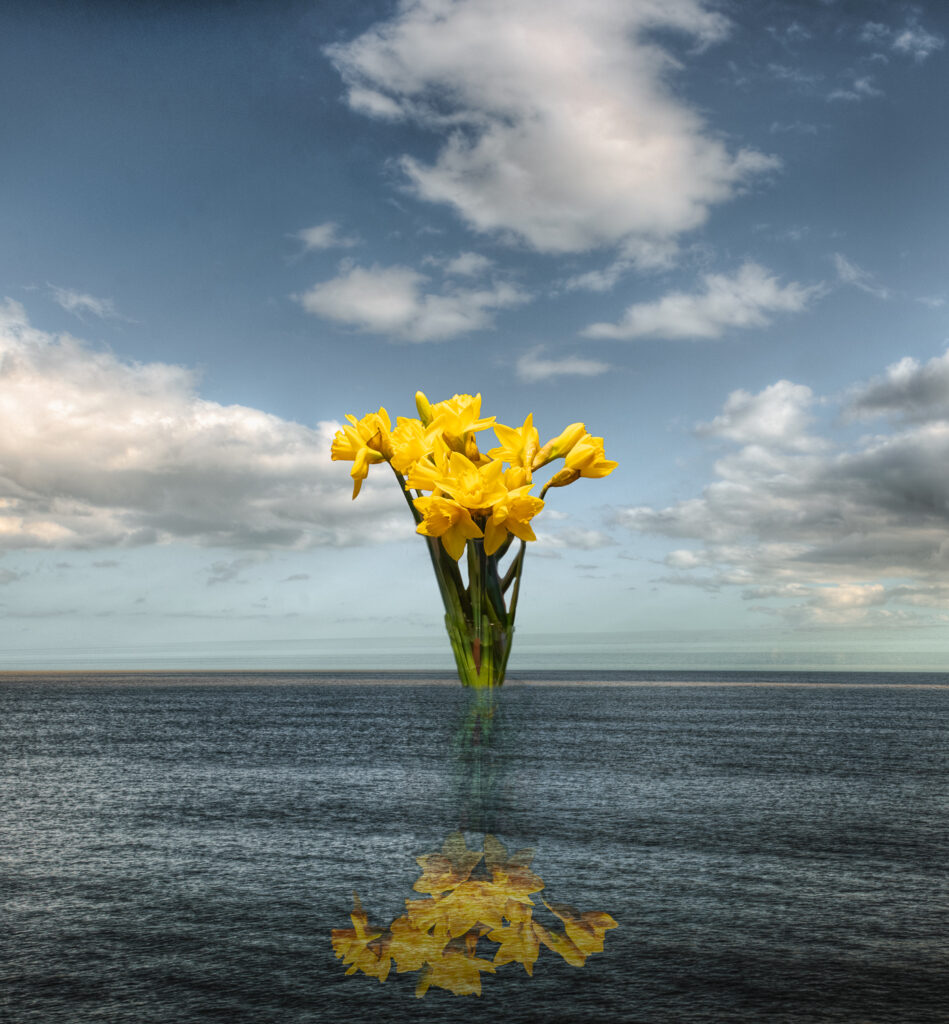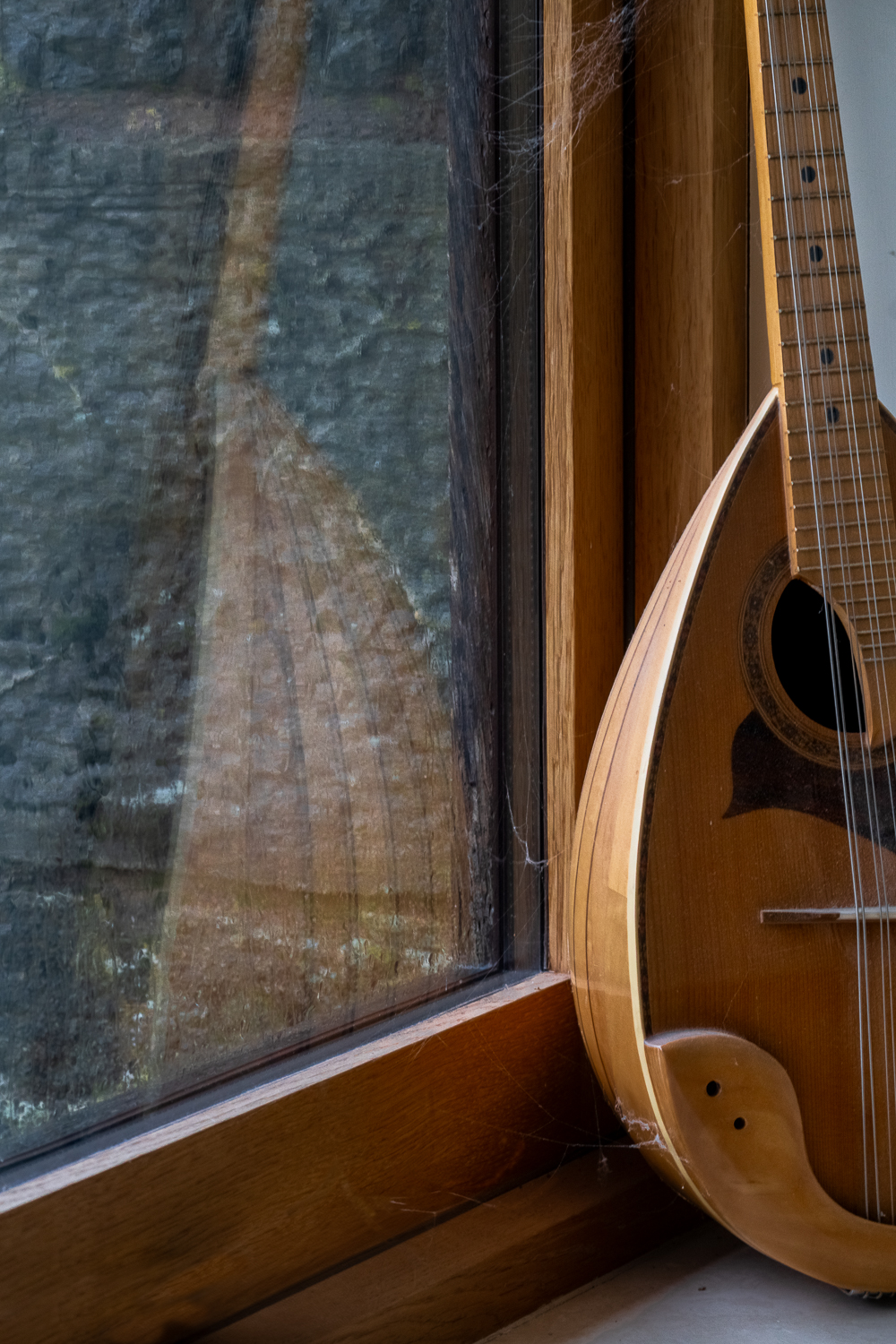
Today our Flickr Challenge was reflection. I created two images for this and am leading with the shot created entirely in camera of my Mandolin covered in cobwebs. I cleaned it off and retook the shots without the cobwebs, but actually preferred this shot.
The second shot was a picture of a vase of daffodils which I have then added onto an old picture of the sky and sea and making my own reflection of the flowers in photoshop. I quite liked this as well, but the top picture was all in camera so it one today’s vote 😉
Let’s ask ChatGPT about reflections:
Reflections: The Beauty of Mirrored Worlds
Reflections are all around us—captured in water, glass, or polished surfaces—creating mesmerizing copies of the world we see. These reflections can distort reality, enhance beauty, or evoke a sense of mystery. They invite us to pause, observe, and appreciate the subtle interplay between light, surface, and perspective.
The Science Behind Reflections
A reflection occurs when light bounces off a surface instead of being absorbed. The angle at which the light hits the surface determines how the image is reflected. Still water, for example, creates a near-perfect mirror image, while rippling water distorts the scene into a dynamic, ever-changing display.
Different materials reflect light in unique ways:
- Water: Produces clear or rippling reflections depending on movement.
- Glass and Mirrors: Offer sharp and accurate reflections with minimal distortion.
- Metallic Surfaces: Create reflective illusions with added texture and depth.
Reflections in Nature and Art
Reflections play a significant role in both nature and human creativity. A serene lake reflecting a vibrant sunset can create a breathtaking visual harmony. Photographers and painters use reflections to add depth and intrigue to their work, capturing the world from a fresh perspective.
Some of the most iconic examples of reflections in nature include:
- Mountain landscapes mirrored in lakes
- City lights glowing in rain-soaked streets
- Sunsets reflecting off ocean waves
Finding Meaning in Reflections
Beyond their aesthetic appeal, reflections symbolize introspection, duality, and perception. They remind us that reality can change based on how we view it, and sometimes, a slight shift in perspective can reveal an entirely new world.
So next time you see a reflection—whether in a puddle, a mirror, or a window—take a moment to appreciate the way it alters and enhances your surroundings. You might just discover a hidden beauty you hadn’t noticed before.